Frog Fruit - UF Herbicide Tolerance Trial
UF Herbicide Tolerance Trial is Concluding
Our chapter-sponsored Frog Fruit herbicide tolerance trial with UF is almost complete, and it appears that we have a successful outcome. All treatments have been applied. The ground cover tolerated all three grass-specific herbicides at all three concentrations. Only one product caused some bleaching, but the plants are healthy. The final step is to trim the plants to collect material to measure the dry weight. A report will follow.
The Villages Chapter of the Florida Native Plant Society is sponsoring an investigation into Frog Fruit herbicide tolerance. We are hoping to find an herbicide that can be used to kill unwanted plants growing with Frog Fruit. A positive outcome of this research will improve the use of Frog Fruit as a ground cover and grass substitute.
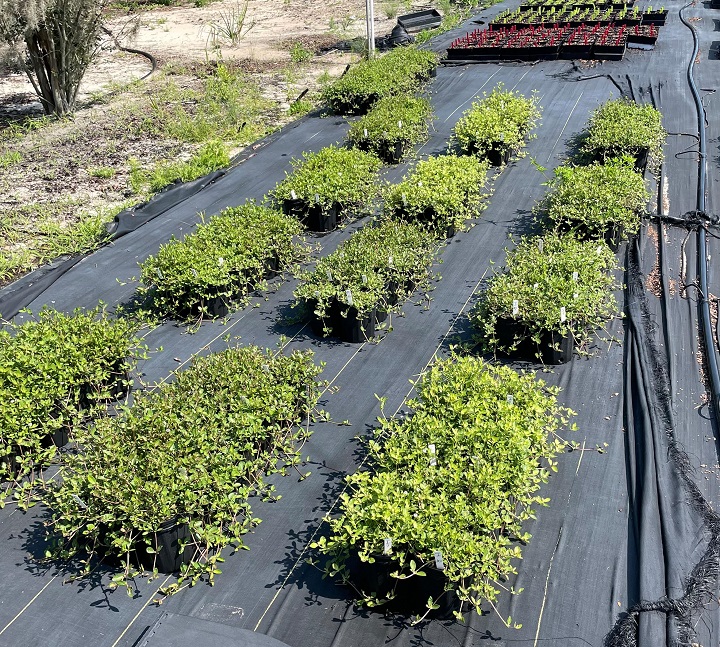
The trial with the University of Florida got underway the third week in May 2023. The picture shows plants after the first application of grass-specific herbicide. So far, the frog fruit is tolerating the treatments of the three different products at all three concentrations.
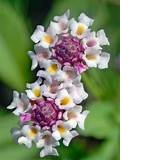 Frog fruit (Phyla nodiflora) is a low-growing plant that is about 3 to 5 inches (7.5 to 13 cm.) in height. It is native to Florida. The plants produce a unique flower from May until October that matures to white blooms with five petals on 4-inch (10 cm.) long spikes. Plants are semi-evergreen and have a high wildlife value. It spreads vigorously and flowers best in sunny damp spots but does well anywhere that gets a bit of sun.
It is a host plant for butterflies and a nectar plant for pollinators.
 Larval hosts: common buckeye (Junonia coenia), phaon crescent (Phyciodes phaon), and white peacock (Anartia jatrophae) butterflies.
Read more about Frogfruit as a ground cover and learn more about the butterflies that use Phyla nodiflora.